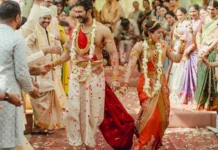
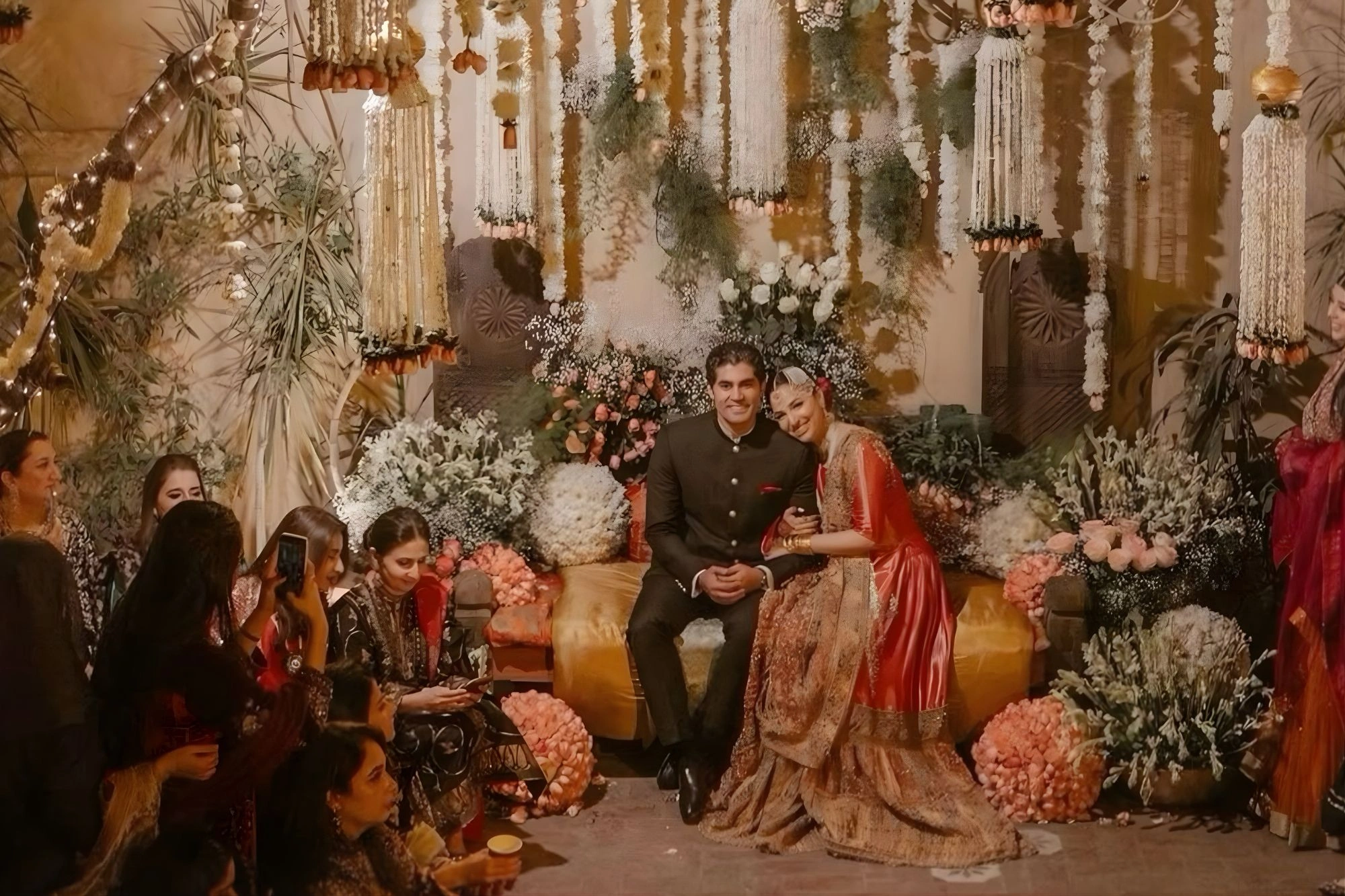
Maximalism is no longer excess; it’s intention. Here’s how Indian couples are reclaiming their colour, craft and culture across every layer of their wedding.
For nearly a decade, Indian weddings leaned toward muted palettes, soft florals, and minimalist mandaps inspired by Western editorial aesthetics. Ivory replaced vermilion, and pampas grass replaced marigolds. But today, a visible shift is unfolding. Couples are embracing maximalism, not as loud chaos, but as a confident return to depth, detail, and cultural pride.
This new wave is not about rejecting global influence. It is about reclaiming identity. And in the context of modern wedding planning, maximalism is emerging as a powerful design philosophy that touches everything, from decor to trousseau, and jewellery to guest experience. Let Wedding Affair uncover the desi maximalism trend that’ll be taking all over 2026 weddings.
Table of Contents
- Colour Is Cultural Memory
- Craftsmanship Takes Centre Stage
- Decor as Immersive Design
- Jewellery That Makes a Statement
- Guest Experience Goes Grand
- Why This Shift Matters
- Integrating It Into Modern Celebrations
Colour Is Cultural Memory
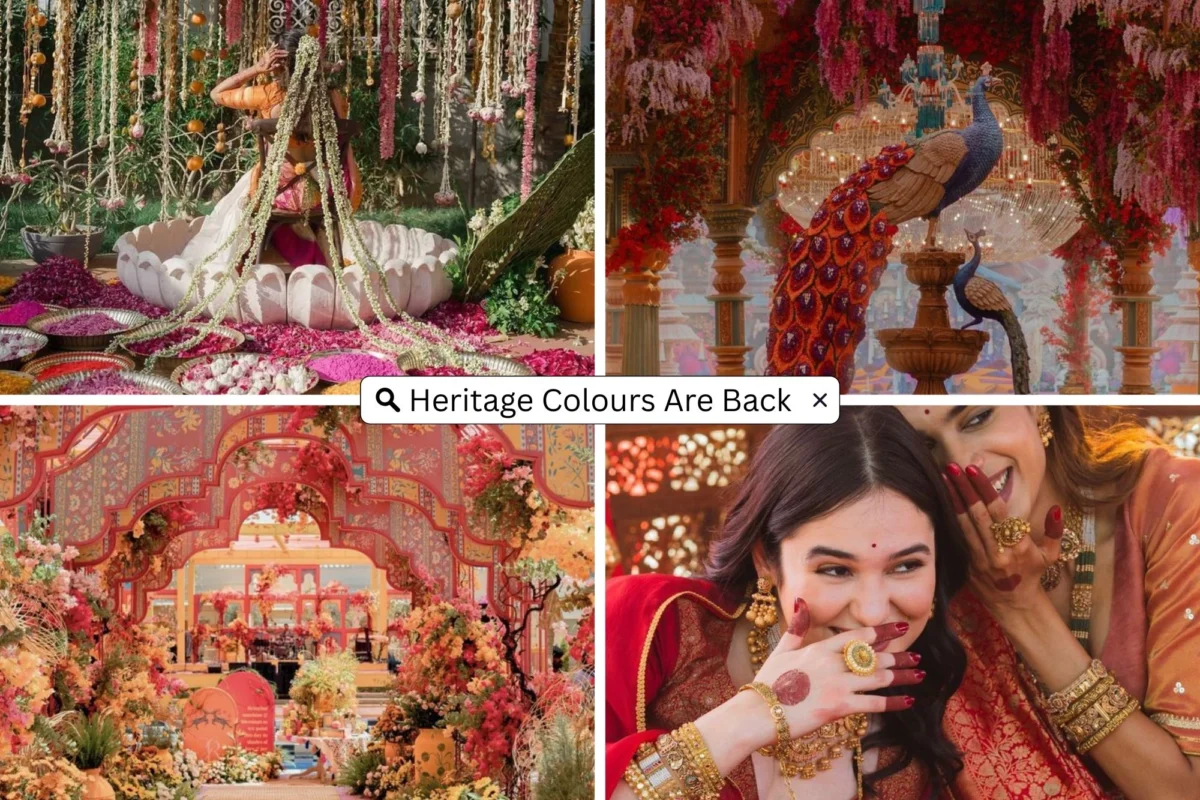
The first sign of this shift is colour. Brides and grooms are moving away from safe pastels and leaning into rani pink, sindoor red, turmeric yellow, orange rust, emerald green and royal blue. These shades are not trends; they are embedded in ritual, symbolism, and regional identity.
In contemporary wedding decor, colour is layered rather than toned down. Mandaps feature contrasting drapes, bold florals, hand-painted backdrops, and heritage motifs. The palette feels celebratory and rooted. This is where maximalism begins, not in excess, but in emotional saturation.
Read Also: Unplugged Wedding: The No Phone Wedding Trend Taking Over
Craftsmanship Takes Centre Stage
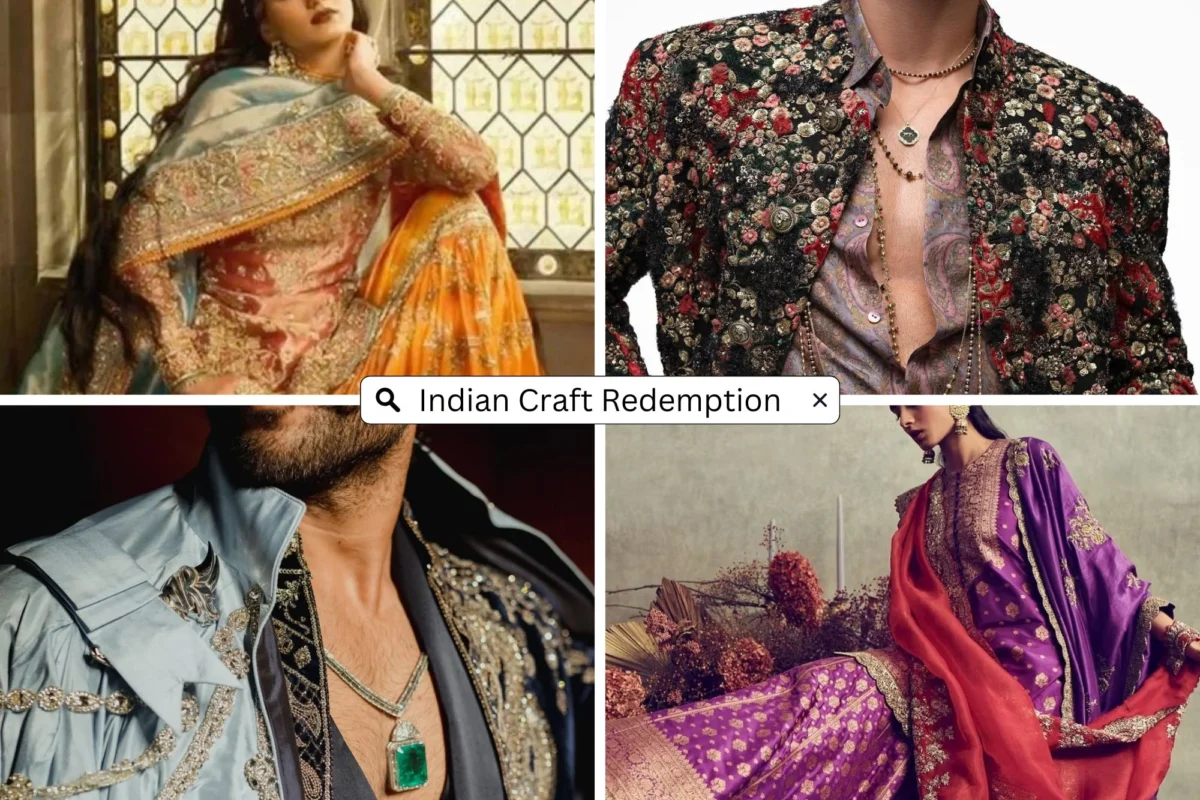
Minimalism often simplified surfaces, whereas the new direction embraces textures. Banarasi brocades, Kanjeevaram silks, Bandhani dupattas, mirrorwork lehengas, zardozi embroidery; craft is being showcased unapologetically. Trousseau planning now includes heirloom revivals and region-specific weaves rather than trend-driven silhouettes alone.
This is not nostalgia; it is reinterpretation. Younger couples are pairing temple jewellery with contemporary blouses, or styling traditional sherwani with unconventional accessories. In this sense, maximalism becomes modern storytelling through craft.
Decor as Immersive Design
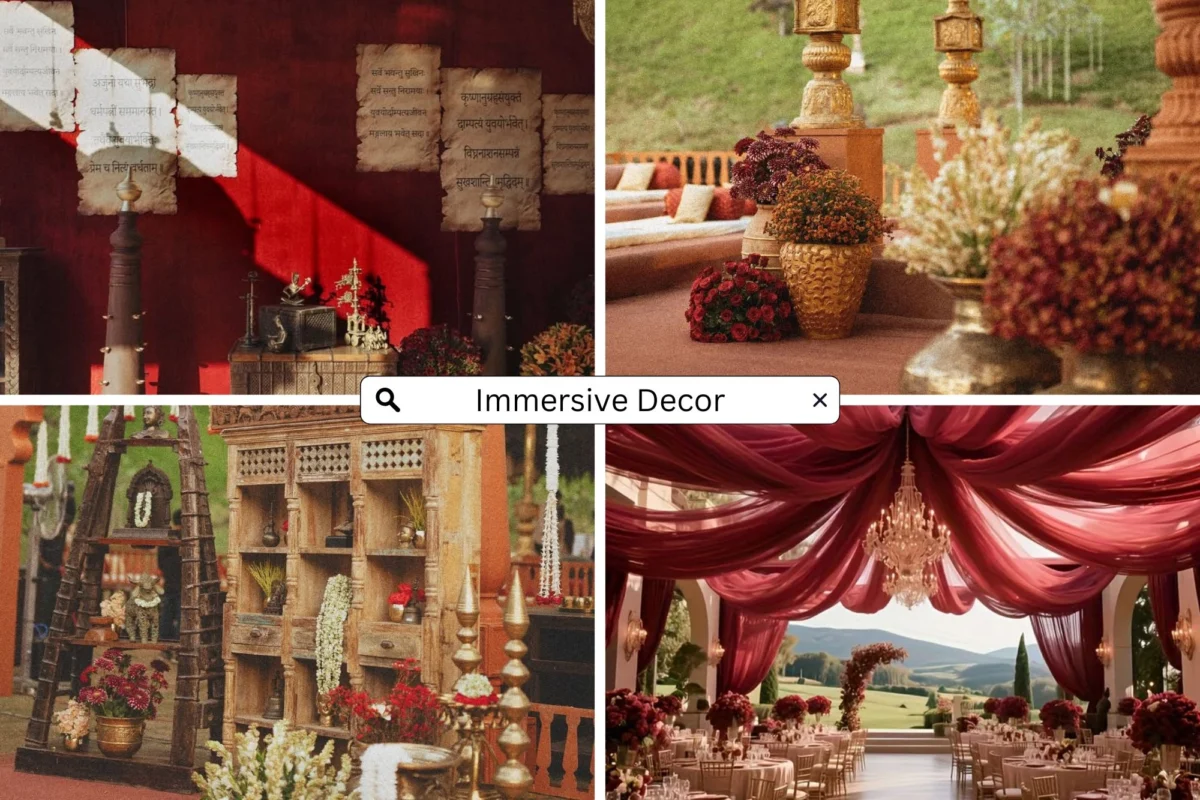
Today’s wedding decor feels more like set design than event styling. Ceilings are draped in cascading textiles, aisles are framed with carved pillars, and entryways resemble palace courtyards. Installations are multi-layered: florals, fruits, lamps, brassware, textiles, all coexisting in one visual narrative.
Within structured wedding planning, this means thinking in layers instead of single focal points. A sangeet isn’t just a stage and dance floor; it is a colour universe. A haldi isn’t just yellow; it is turmeric, marigold, sandalwood, and brass combined. Maximalism here is about dimension. Every angle offers details, and every detail has intent.
Jewellery That Makes a Statement
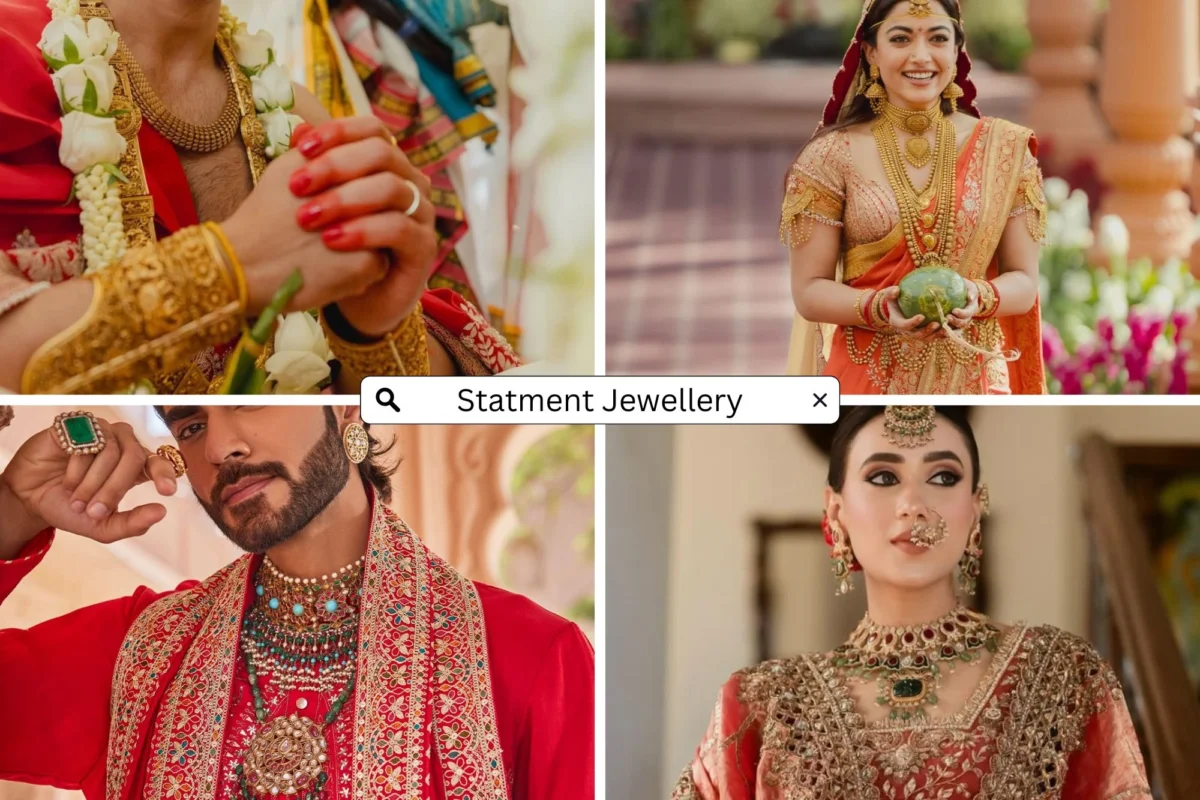
For years, delicate diamonds dominated bridal styling. Now, bold polki sets, stanked bangles, layered rani haars, oversized jhumkas, and gemstone chokers are reclaiming their space.
Jewellery is no longer an accessory; it is architecture. Brides are mixing heirloom pieces with custom designs, creating looks that feel abundant yet personal. Grooms, too, are investing in brooches, layered malas, cuffs, and statement safas. In this landscape, maimalism transforms styling from minimal elegance to commanding presence.
Read Also: A Checklist For 5 Medical Test Before a Wedding
Guest Experience Goes Grand
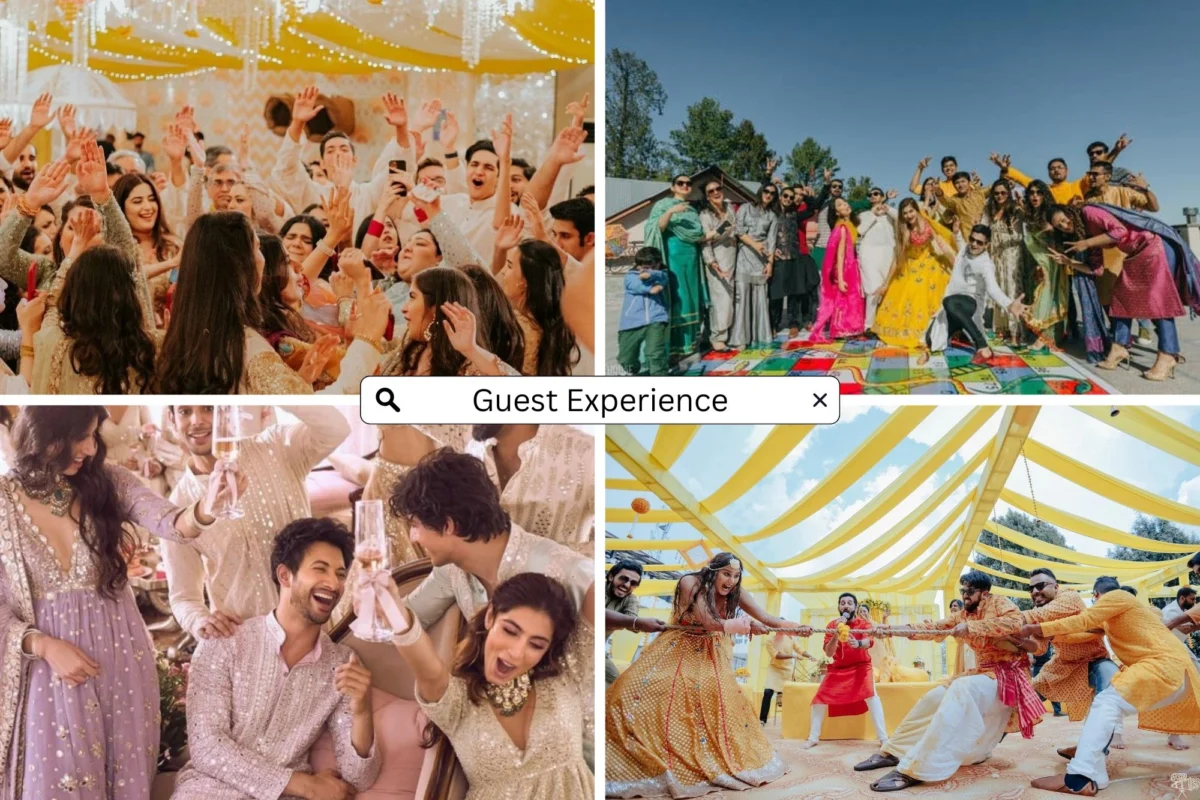
The return to scale is not just visual; it is experiential, afterall, Atithi Devo Bhava. Curated welcome hampers with regional sweets, live folk performances, traditional artisans demonstrating crafts, and elaborate food stations celebrating regional cuisines are redefining hospitality. Weddings feel immersive rather than staged. Thoughtful wedding planning now includes designing moments that reflect cultural richness. This depth distinguishes new-age desi maximalism from performative extravaganza.
Why This Shift Matters
After years of international aesthetic borrowing, there is renewed pride in Indian design language. Social media exposure has not diluted tradition; it has amplified awareness of it. Couples are more informed about weaves, jewellery history, and regional rituals than ever before.
This movement is less about “more is more” and more about “more means meaning.” Maximalism becomes an assertion: Indian weddings do not need to be softened to be sophisticated. For planners and designers, this shift offers a strategic advantage. Heritage-inspired themes, layered textures, and bold palettes create distinctive identities in a saturated wedding market.
Integrating It Into Modern Celebrations
For couples exploring this direction, the key is curation. Maximal does not mean cluttered. Start with a strong colour story. Choose two or three cultural references: textile, region, or craft, and build outward. Layer lighting, fabric, and floral intentionally. Work with stylists who understand proportion and visual balance. When done thoughtfully, maximalism feels regal, not overwhelming.
Read Also: Your Wedding Planning Should Not Be a Group Project!
Frequently Asked Questions
Question 1: How is modern maximalism different from traditional Indian wedding grandeur?
Modern maximalism is curated and intentional, blending heritage elements with contemporary styling rather than repeating tradition as it was.
Question 2: Can intimate weddings adopt maximalist aesthetics?
Yes. Layered textures and bold colours work beautifully even in intimate venues.
Question 3: How do you avoid overwhelming guests with too much detail?
Maintain a cohesive colour palette and repeat key elements consistently.